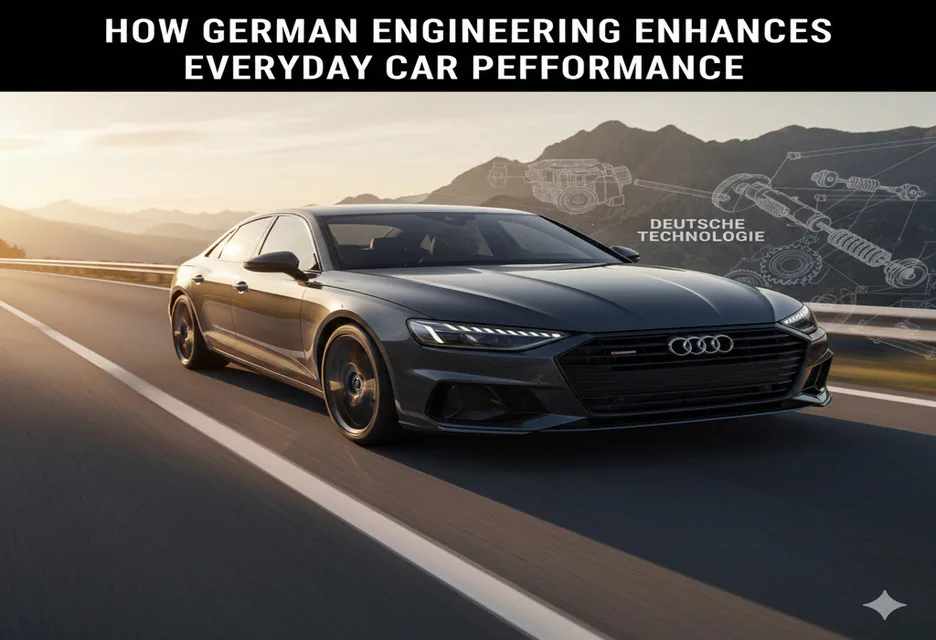
In the automotive world, few terms carry as much weight as "German engineering." It is a phrase that immediately conjures images of precision, durability, and superior performance. However, for many drivers, this concept feels abstract, reserved for luxury sedans or high-speed autobahn cruisers.
The reality is that German engineering car performance principles benefit drivers in every scenario, from the school run to the daily commute. It is not just about raw speed; it is about how a vehicle feels, responds, and protects its occupants. This engineering philosophy translates into tangible benefits that enhance the daily driving experience.
For residents in the UAE, where driving conditions can be demanding, these qualities are invaluable. Reliability in extreme heat and stability at highway speeds are not luxuries; they are necessities. Understanding how engineering impacts these factors helps drivers appreciate the value of their vehicles.
What Makes German Engineering Stand Out in the Automotive World
German automotive culture is built on a foundation of rigorous standards and relentless innovation. It is a mindset that refuses to compromise on quality, regardless of the vehicle's price point. This approach has set a global benchmark that other manufacturers strive to meet.
The core of this philosophy lies in the belief that a car is a complete system, not just a collection of parts. Every component is designed to work in harmony with the others. This integration is what gives German cars their distinctive "solid" feel.
It is a commitment to excellence that extends from the engine block to the door hinges. This attention to detail ensures that the vehicle performs consistently over its lifespan. It is why these cars are often seen as benchmarks for their respective classes.
Precision Design and Attention to Detail
Precision is the hallmark of German manufacturing. Components are machined to incredibly tight tolerances, ensuring they fit together perfectly. This reduces friction, vibration, and wear, leading to a smoother operation.
In the real world, this means an engine that hums rather than rattles. It means steering that is direct and free of play. These small details accumulate to create a driving experience that feels refined and effortless.
The tactile quality of the interior also reflects this precision. Buttons click with a satisfying weight, and materials are chosen for their durability. It creates an environment that feels premium and well-thought-out.
Engineering Built Around Real World Conditions
German cars are tested extensively in diverse environments, from the frozen Arctic to the scorching desert. This ensures that the engineering holds up under real-world stress. The goal is to create a vehicle that is robust enough to handle anything a driver throws at it.
Efficiency is another key pillar. Engineers strive to extract maximum performance from every drop of fuel. This focus on efficiency reduces running costs while maintaining power and responsiveness.
Long-term durability is prioritized over short-term trends. The designs are evolutionary rather than revolutionary, ensuring that proven technologies are refined over time. This conservative approach leads to vehicles that age gracefully.
How Engineering Quality Improves Everyday Driving Experience
The true test of engineering is not on a test track but on the daily commute. How a car handles stop-and-go traffic or a sudden lane change defines the ownership experience. German engineering excels in making these mundane tasks feel engaging and safe.
A well-engineered car masks the effort of driving. It filters out the noise and harshness of the road while keeping the driver connected. This balance reduces fatigue and makes driving less of a chore.
Whether navigating the tight streets of Deira or cruising on Emirates Road, the benefits are clear. The car inspires confidence, allowing the driver to relax and focus on the road ahead.
Smooth Handling and Predictable Control
One of the most noticeable traits of German cars is their handling. The suspension is tuned to provide a flat, composed ride without being overly stiff. This body control prevents the car from leaning excessively in corners.
Steering systems are calibrated to offer precise feedback. The driver knows exactly what the front wheels are doing. This eliminates the vague, floating sensation often found in less driver-focused vehicles.
Predictability is a major safety factor. In an emergency maneuver, the car reacts linearly and consistently. This allows the driver to correct a skid or avoid an obstacle with greater assurance.
Comfort Without Compromising Performance
Historically, cars were either comfortable or sporty. German engineers have worked hard to bridge this gap. Advanced damping technology allows a car to absorb bumps while remaining stable at speed.
This duality is perfect for the mixed road conditions in the UAE. A car can handle the speed bumps of residential areas and the high speeds of the highway equally well. It does not force the driver to compromise.
Noise insulation is also a priority. Thick glass and sound-deadening materials create a quiet cabin. This serenity is a key component of the premium feel associated with German brands.
The Role of Advanced Technology in Daily Car Performance
Technology is the enabler of modern performance. German manufacturers are often at the forefront of introducing new safety and convenience features. However, they do not add technology for its own sake.
Every system must serve a purpose and enhance the driving experience. Whether it is a sophisticated traction control system or an intuitive infotainment interface, the goal is usability. Technology should support the driver, not distract them.
This integration of tech and mechanics is seamless. The driver often does not realize how many systems are working in the background to keep them safe.
Smart Systems That Support Driver Confidence
Driver assistance systems like adaptive cruise control and lane-keeping assist reduce the workload on long drives. They act as a second pair of eyes, monitoring traffic and road markings. This support is invaluable on busy UAE highways.
Stability control systems intervene imperceptibly to correct a slide. By braking individual wheels, the car corrects its own path. This technology has saved countless lives by preventing loss of control accidents.
Braking assist ensures maximum stopping power is applied in an emergency. It detects panic braking and boosts the pressure instantly. This reduces stopping distances significantly.
Balancing Innovation With Reliability
While innovation is important, reliability is paramount. German engineers test new technologies rigorously before releasing them to the public. They ensure that electronic systems are as durable as mechanical ones.
This testing phase identifies potential failure points. It ensures that sensors can withstand heat, dust, and vibration. The result is technology that works consistently over the life of the vehicle.
Software updates allow cars to improve over time. Manufacturers can refine performance and fix bugs remotely. This keeps the vehicle current and optimized.
Why German Engineered Cars Perform Well in UAE Conditions
The UAE presents a unique set of challenges for any vehicle. Extreme heat, dust, and high speeds are the norm. German cars are well-suited to this environment due to their robust engineering standards.
Cooling systems are designed to handle high thermal loads. This prevents overheating in summer traffic. Interiors are built to withstand intense UV radiation without cracking or fading.
The high-speed stability required for the Autobahn translates perfectly to UAE highways. These cars feel planted and secure at 140 km/h, making long commutes less stressful.
Performance Under High Temperatures
Heat management is a critical aspect of vehicle design. Engines, transmissions, and brakes all generate heat that must be dissipated. German engineers use large radiators and efficient airflow management to keep temperatures in check.
This thermal efficiency ensures that performance does not drop off when the mercury rises. The air conditioning systems are also powerful, cooling the cabin rapidly. This is a non-negotiable requirement for comfort in the region.
Materials under the hood are chosen for their heat resistance. Hoses, belts, and seals maintain their integrity despite the thermal stress. This reduces the risk of breakdowns in summer.
Consistency During Long Highway Drives
Commuting between emirates puts sustained load on the drivetrain. A car must be able to maintain highway speeds for hours without strain. German engines are built for this type of endurance.
The transmission gearing is optimized for high-speed cruising. This keeps engine RPM low, reducing noise and fuel consumption. It allows the car to cover long distances effortlessly.
Aerodynamics play a huge role in stability and efficiency. German cars spend hours in wind tunnels to minimize drag and lift. This ensures they cut through the air cleanly and stay pressed to the road.
How Tyres and Road Contact Complete the Performance Equation
Even the best-engineered car relies on four patches of rubber to perform. Tyres are the final link in the chain of command from driver to road. They transmit all the acceleration, braking, and cornering forces.
The suspension and steering systems are tuned to work with specific tyre characteristics. Choosing the right tyre is essential to unlock the full potential of vehicle engineering. It is a critical component of the overall setup.
Ignoring tyre quality undermines the engineering effort that went into the car. It compromises grip, comfort, and safety. A high-performance car on budget tyres is a wasted opportunity.
Why Tyre Technology Matters for Handling and Safety
Tyre manufacturers work closely with car engineers to develop compatible products. They create compounds and tread patterns that complement the vehicle's dynamics. This collaboration ensures optimal performance.
Drivers often look for brands like continental tyres because their German engineering heritage aligns perfectly with the precision and safety standards of high-performance vehicles. This synergy results in predictable handling and shorter braking distances. It ensures that the tyre can handle the heat and speed demanded by the vehicle.
Grip is essential for safety, especially in emergency manoeuvres. A quality tyre provides the traction needed to avoid an accident. It allows the electronic safety systems to function effectively.
Matching Engineering Precision With the Right Road Setup
The suspension geometry of a German car is precise. It relies on the tyre to hold its shape under load. A tyre with weak sidewalls will flex too much, ruining the handling precision.
Alignment is also critical. The precise settings for camber and toe ensure the tyre wears evenly and tracks straight. Regular alignment checks maintain the factory-fresh feel of the car.
Balancing the wheels eliminates vibration at high speeds. This protects the suspension components and improves ride comfort. It is a small detail that makes a big difference.
Long Term Performance and Ownership Benefits
Buying a car is a long-term investment. German engineering aims to deliver value over the entire lifecycle of the vehicle. While the initial cost may be higher, the long-term benefits are substantial.
A car that performs well after five years retains its value better. It provides a satisfying ownership experience that builds brand loyalty. It is about quality that endures.
Maintenance is key to preserving this performance. Following the manufacturer's schedule ensures the car remains in peak condition. It protects the investment and ensures safety.
Reduced Wear and Consistent Driving Feel Over Time
High-quality materials resist wear better than cheaper alternatives. Suspension bushings, engine mounts, and interior trim last longer. This means the car feels tight and solid for years.
The driving characteristics do not degrade rapidly. The steering remains sharp, and the engine remains smooth. This consistency is highly valued by owners who keep their cars for a long time.
It reduces the need for expensive repairs. Preventive engineering catches potential issues before they become failures. It is a proactive approach to durability.
Lower Stress and Higher Confidence for Daily Drivers
Knowing your car is reliable reduces daily stress. You do not worry about whether it will start or if it can handle the journey. This peace of mind is a significant benefit of quality engineering.
Confidence in the vehicle's safety features allows you to drive more relaxed. You know that if the worst happens, the car is designed to protect you. This psychological comfort is invaluable.
It transforms driving from a necessity into a pleasure. You look forward to the drive rather than enduring it. This positive relationship with the vehicle enhances daily life.
Conclusion
The reputation of German engineering is well-earned. It represents a commitment to excellence that permeates every aspect of the vehicle. German engineering car performance is not a marketing slogan; it is a tangible reality on the road.
For drivers in the UAE, this engineering offers practical benefits. It delivers safety, comfort, and reliability in a challenging environment. It turns the daily commute into a refined experience.
Choosing a vehicle built with these principles is a smart decision. It ensures you have a machine that is capable, durable, and enjoyable. It elevates the standard of what we expect from our cars.
FAQ Section
Is German engineering noticeable in daily driving?
Yes, it improves comfort, control, and driving confidence.
Do German engineered cars handle UAE heat better?
They are designed to perform consistently in demanding conditions.
Is performance only about speed?
No, it includes stability, efficiency, and comfort.
Does engineering quality affect long term reliability?
Yes, better engineering usually means more consistent performance over time.